
Blog

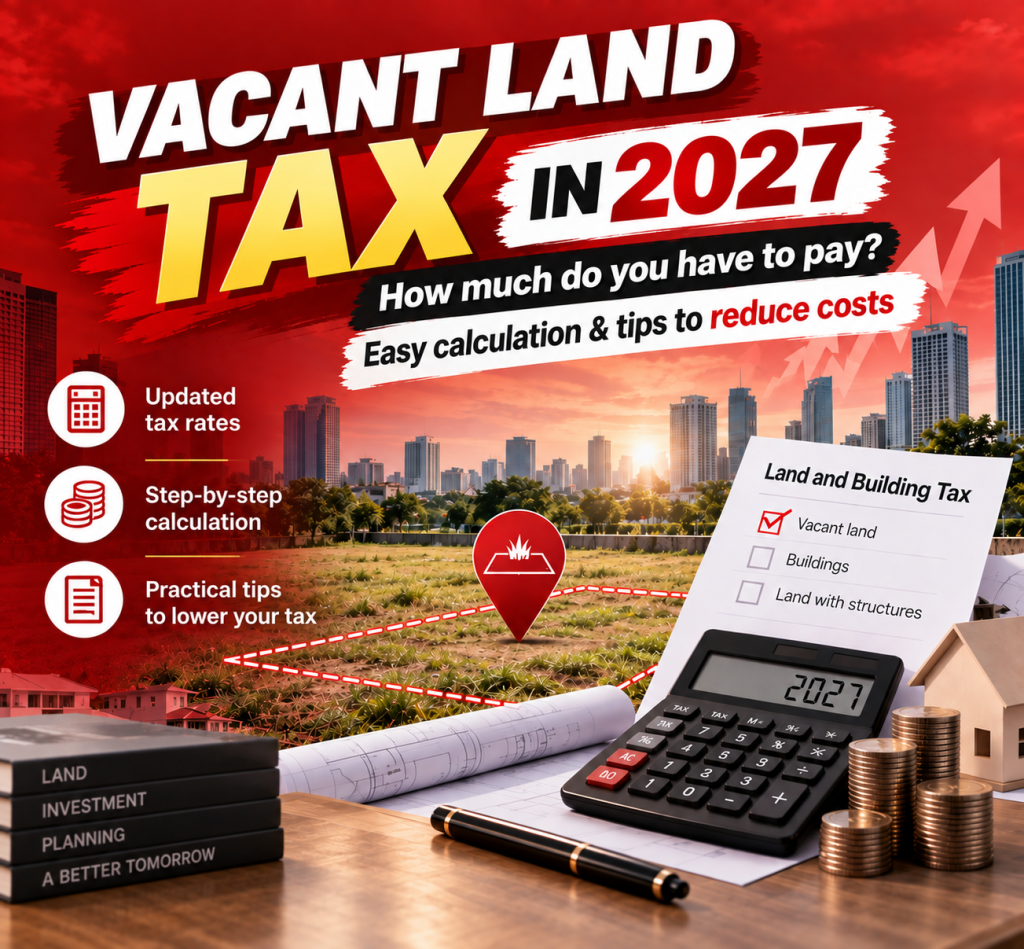
Buying land and leaving it unused may seem like it costs nothing. In reality, vacant land can come with an ongoing cost: land and building tax.
Under Thailand’s Land and Building Tax framework, land that is left vacant or unused may be subject to a higher tax burden over time. This means that simply holding valuable land without using it can become increasingly costly.
In this article, NPD Thailand explains how vacant land tax in Thailand works, how it is calculated, and how landowners can turn unused land into an income-generating asset.
In simple terms, vacant land tax applies to land or property that is left unused or is not being used appropriately according to its condition.
Vacant or unused land is subject to land and building tax, with the statutory tax ceiling generally set at 1.2% of the tax base. If the property continues to remain vacant for consecutive years, an additional tax mechanism may apply.
If land remains vacant for three consecutive years, the applicable tax rate can increase by 0.3 percentage points in the fourth year, with another 0.3 percentage-point increase for every additional three-year period that the land remains unused. The total rate is capped at 3%.
Therefore, even if no building or business is operating on the land, owning unused land can still create a significant annual cost—especially for high-value plots in Bangkok and other major business areas.
The standard tax rates commonly applied to vacant or unused land are based on the property’s assessed value.
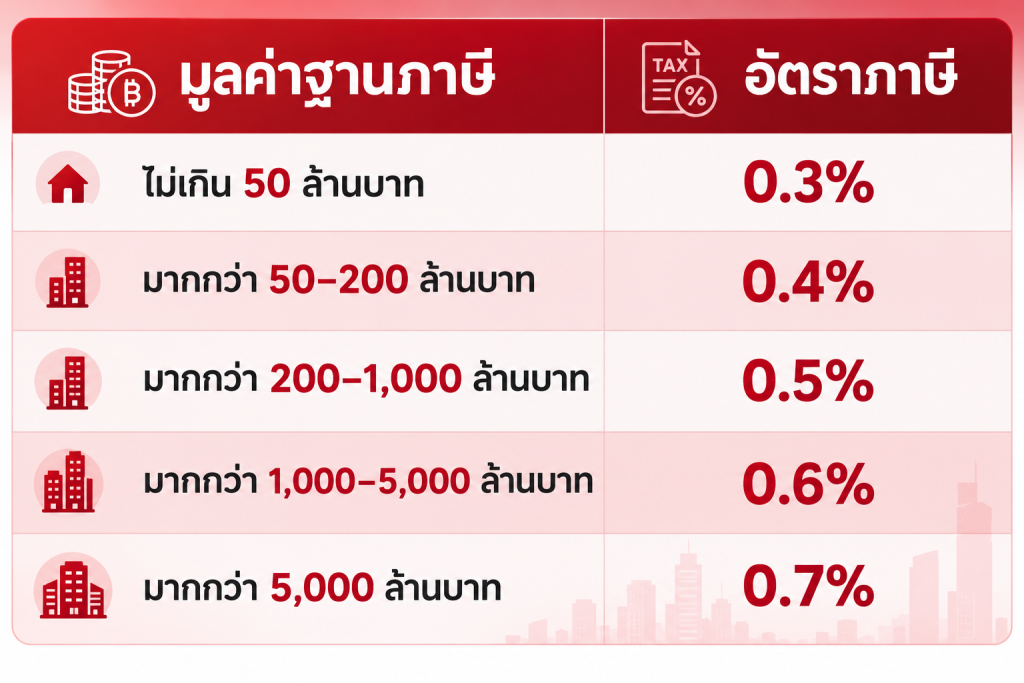
An important point for landowners is that land left vacant for three consecutive years may be subject to an additional 0.3 percentage points, with further increases every three years if the land continues to remain unused. The total tax rate cannot exceed 3%.
In other words, the longer valuable land remains unused, the greater its potential tax burden can become.
Note: Actual tax payable depends on the applicable tax rate, assessed property value, duration of vacancy, property classification, and relevant regulations for the tax year.
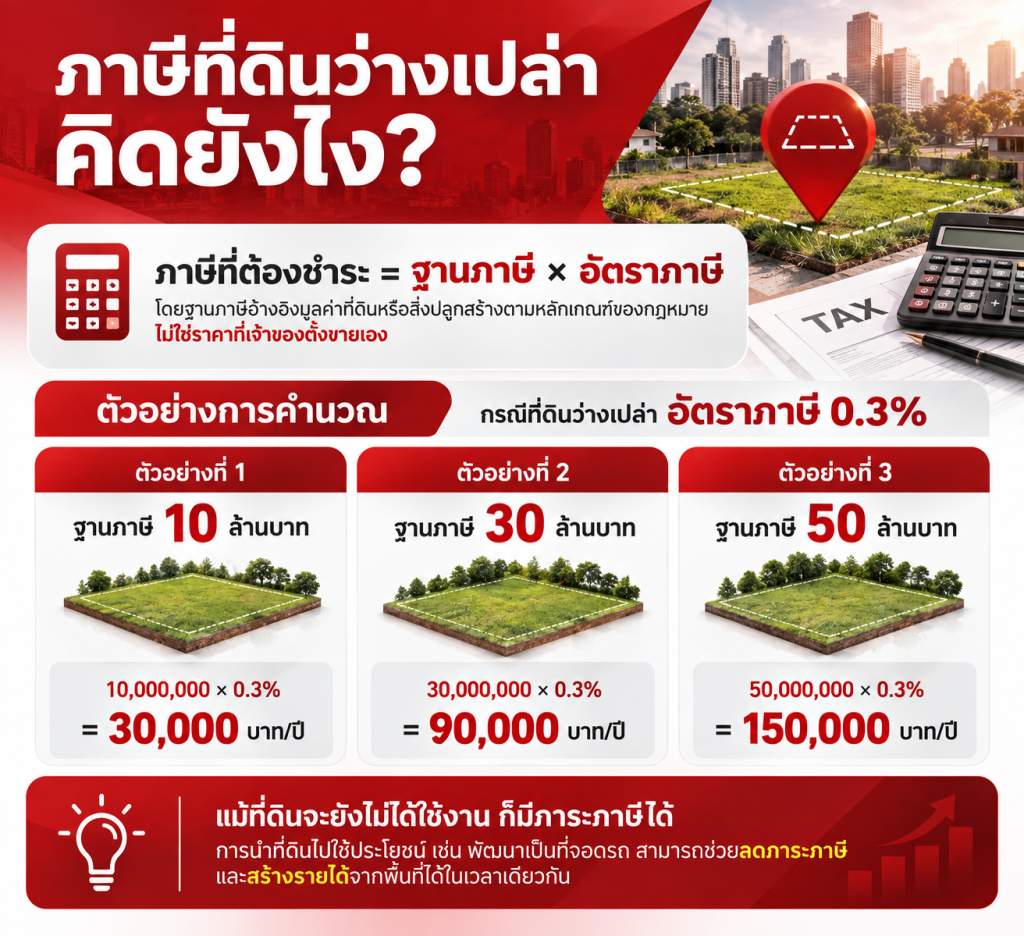
The basic calculation is straightforward:
Land Tax = Tax Base × Applicable Tax Rate
The tax base is generally determined using the official assessed value of the property rather than the price at which the owner wishes to sell the land.
For example, if a vacant plot has an assessed value of THB 50 million and a base tax rate of 0.3% applies:
THB 50,000,000 × 0.3% = THB 150,000 per year
However, this is a simplified example using the base rate. If the property has remained vacant for several consecutive years, the applicable rate may be higher due to the additional rate imposed on continuously unused land.
This is particularly important for investors and property owners who plan to hold land for the long term.
The tax system encourages landowners to make productive use of their property. Imagine owning a plot worth tens or hundreds of millions of baht in a major business district and leaving it unused.
Not only are you missing an opportunity to generate income from the property, but you may also continue paying land tax while the applicable tax rate potentially increases over time.
For this reason, the question may not simply be:
“How can I reduce my land tax?”
A more useful question could be:
“How can I put this land to use and generate income from it?”
Reducing land tax should not mean simply finding a way to avoid paying tax. The key is to put the property to genuine and legally compliant use.
Authorities may consider the actual condition and use of the property when determining its tax classification.
Depending on the location, size, regulations, and commercial potential of the land, owners may consider using the property for business purposes, leasing it, developing a project, conducting qualifying agricultural activities, or developing it into a parking lot.
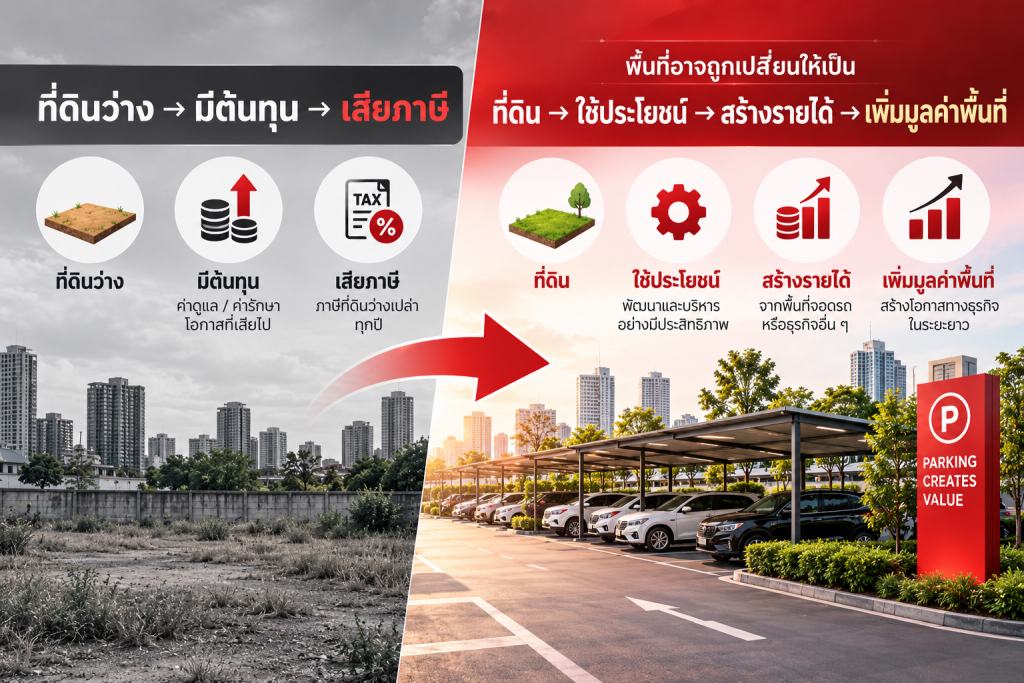
For land in a suitable location, parking can be particularly interesting because it can turn an unused property into an income-generating asset.
For land located in areas with high parking demand—such as near office buildings, hospitals, BTS or MRT stations, markets, restaurants, tourist attractions, airports, or business districts—developing the property into a parking lot can be one possible business model.
However, operating a parking lot involves much more than drawing parking spaces and allowing cars to enter.
Landowners need to consider parking rates, staffing, operating costs, revenue management, entrance and exit systems, security, marketing, customer service, and overall parking operations.
For property owners who already own land but do not have a dedicated parking management team, NPD Thailand can help analyze the potential of the site and design a suitable parking management and land development model based on its location and market demand.
Depending on the project, this can also include investment and improvements within the parking facility.
The objective is therefore not simply to use the land “just to reduce tax.”
The bigger opportunity is to determine how an existing property can create sustainable value and generate long-term revenue.
Vacant land tax is an important cost that property owners should consider when holding unused land in Thailand.
Vacant or unused land is subject to land and building tax, and continuously leaving the property unused may result in an additional 0.3 percentage-point increase after every three-year period, subject to the legal maximum rate of 3%.
For landowners with properties in high-potential locations, putting the land to productive use can offer benefits beyond managing the tax burden.
It can transform an asset that previously generated only expenses into a property capable of generating recurring revenue and creating long-term value.
Have vacant land and looking for a way to generate income from it?
NPD Thailand can help assess the potential of your property, explore the feasibility of developing it into a parking facility, and design a parking management model suited to the location and the owner’s business objectives.

